Overview
Wind, temperature and visibility drive operational decisions on industrial sites: where an H2S release will travel, whether a crane can lift, whether a flare can be lit, whether a helicopter can land. We design weather stations that deliver reliable data in desert heat, dust and marine air, and connect that data to the people and systems that act on it.
How the system works
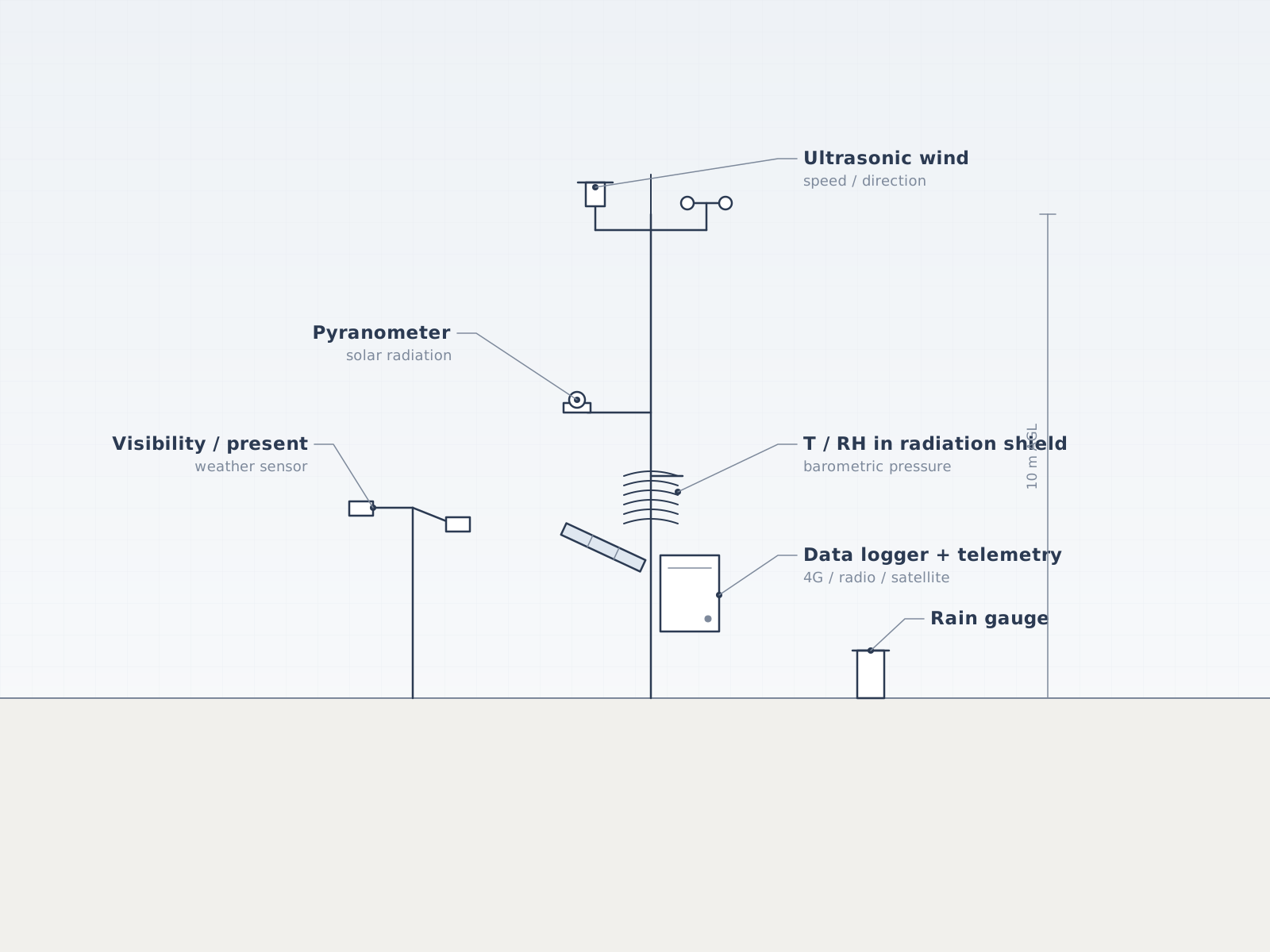
- Measures wind, temperature, humidity, pressure, rain, radiation and visibility continuously
- Feeds real-time wind data to gas-dispersion models and emergency response for H2S and toxic releases
- Warns of approaching lightning, thunderstorms, high winds and dust storms
- Provides aviation-grade observations: visibility, present weather, cloud base and runway visual range
- Logs and transmits data with timestamps for operations, compliance and long-term climatology
Turnkey scope. Siting study, mast and foundation design, sensor selection, lightning protection and earthing, installation, commissioning, DCS integration, data QA and long-term operation and maintenance.
Typical system architecture
From the sensor in the field to the alarm on your phone: one engineered data path, designed, installed and supported by one team.
Measured parameters
| Wind |
|
|---|---|
| Atmosphere |
|
| Radiation |
|
| Visibility & aviation |
|
| Severe weather |
|
| Data |
|
System configurations
Typical locations
- Oilfields and gathering stations
- Refineries and gas plants
- Airports and airstrips
- Offshore platforms and ports
- Solar and wind sites
- Remote desert and mountain sites
- Construction sites and cranes
Standards & compliance
Systems are designed and documented to recognised international standards and to the requirements of national regulators in Saudi Arabia, Oman and Qatar.
Typical applications
- Gas dispersion inputs and H2S emergency response
- Flare operation and permit decisions
- Crane and work-at-height wind limits
- Airport and helideck operations
- Offshore and marine operations
- Renewable resource assessment and plant performance
- Remote site and pipeline weather awareness
Automatic weather stations in Saudi Arabia, Oman and Qatar
We design and install automatic weather stations (AWS) for oil and gas fields, refineries, airports, offshore platforms, ports and solar plants. Stations measure wind speed and direction, temperature, humidity, barometric pressure, rainfall, solar radiation, visibility and present weather, with data loggers and 4G or satellite telemetry.
Typical applications include wind data for H2S emergency response and gas dispersion, specialist turnkey aviation weather systems (AWOS, runway visual range and ceilometers), lightning and thunderstorm warning, dust-storm monitoring and solar resource measurement with pyranometers.
Products we supply
- Automatic weather station
- Ultrasonic anemometer
- Cup anemometer and wind vane
- Met mast
- Visibility and present weather sensor
- Ceilometer
- RVR system
- Lightning detector
- Pyranometer
- Rain gauge
- Data logger
Frequently asked questions
Why does an oilfield need a weather station?
Wind direction and speed decide muster points and evacuation routes during an H2S release, and feed gas dispersion models.
Do your weather stations work in desert dust?
Yes. We use ultrasonic sensors with no moving parts and enclosures rated for 50 °C ambient and sand.